Personal training is not just a luxury for competitive athletes. It's a structured approach to fitness that removes guesswork, reduces injury risk, and speeds up progress for anyone from beginners to experienced gym-goers. If you've been training inconsistently or hit a plateau, working with a certified trainer changes the dynamic entirely.
What a Personal Trainer Actually Does
A personal trainer does more than count reps and motivate you to finish a set. The core job is to design a program built around your specific body, goals, and limitations, then adjust it week by week based on how you respond.
Key responsibilities of a personal trainer:
- Assessment — movement screening, body composition baseline, fitness testing (VO2 max estimate, strength benchmarks)
- Program design — sets, reps, tempo, rest periods, exercise selection, periodization
- Form correction — real-time technique feedback to prevent compensatory movement patterns
- Progress tracking — logging performance data and adjusting load or volume
- Nutrition guidance — general recommendations within their scope of practice (not medical advice)
- Accountability — scheduled sessions and check-ins that keep training consistent
What trainers typically do not do: diagnose injuries, prescribe diets for medical conditions, or replace a physical therapist.
Types of Personal Training Available at Gyms
| Format | Session Length | Best For | Avg. Cost (US, 2026) |
|---|---|---|---|
| 1-on-1 in-person | 45–60 min | Beginners, injury rehab, serious athletes | $60–$120/session |
| Semi-private (2–4 people) | 45–60 min | Budget-conscious, training with a partner | $35–$60/person |
| Small group training | 45–50 min | Functional fitness, motivation from others | $20–$40/person |
| Online coaching | Async or live | Flexible schedules, travel, remote areas | $100–$300/month |
| Hybrid (in-person + app) | Varies | Self-sufficient trainees who need check-ins | $150–$400/month |
Most commercial gyms in the US now offer all five formats. Boutique studios tend to specialize in one or two.
How to Choose the Right Personal Trainer
Certification matters, but it's not the whole picture. In the US, the fitness industry is unregulated at the federal level, meaning anyone can call themselves a personal trainer. Look for trainers who hold credentials from accredited organizations.
Accredited certifications recognized by NCCA or DEAC:
- NASM (National Academy of Sports Medicine)
- ACSM (American College of Sports Medicine)
- ACE (American Council on Exercise)
- NSCA-CPT (National Strength and Conditioning Association)
- ISSA
Beyond certification, evaluate:
- Specialization — A trainer with experience in strength and hypertrophy will approach your program differently than one who comes from a group fitness background. Match their background to your goal.
- Communication style — Do they explain the reasoning behind exercises, or just demonstrate and move on? Trainers who teach tend to produce more self-sufficient clients.
- Assessment process — A quality trainer runs an intake assessment before writing a single session. If they skip this step, that's a red flag.
- Client retention — Ask how long their current clients have been training with them. Long tenure usually signals results and trust.
- Availability and scheduling flexibility — Inconsistent session frequency kills progress. Make sure their schedule matches yours before committing.
What to Expect in Your First 8–12 Weeks
Progress timelines vary based on training age, diet, sleep, and consistency. Below is a realistic expectation framework for a beginner starting with two to three sessions per week.
| Timeline | What Typically Changes |
|---|---|
| Weeks 1–2 | Neural adaptation begins; form improves faster than strength; soreness is highest here |
| Weeks 3–4 | Consistency builds; strength measurably increases on primary lifts (5–15% range) |
| Weeks 5–8 | Body composition shifts become visible if nutrition is aligned; endurance improves noticeably |
| Weeks 9–12 | Measurable changes in lean mass and fat percentage; training habits are mostly ingrained |
Note: clients who train twice per week with a trainer but do zero additional activity outside sessions progress roughly 40% slower than those who add one to two independent sessions weekly.
Common Training Modalities Used in Personal Training
Personal training programs often combine multiple methods depending on the client's goals. Here's how the most common approaches break down:
Strength training Progressive overload applied to compound movements (squat, deadlift, press, row). The primary driver of muscle development and long-term metabolic health.
HIIT (High-Intensity Interval Training) Short bursts of maximum effort followed by recovery. Effective for cardiovascular conditioning and fat loss. A typical session runs 20–30 minutes with work-to-rest ratios between 1:1 and 1:3.
Functional training Movement-based training that mimics daily or sport-specific patterns. Emphasizes coordination, balance, and multi-joint stability. Common in post-rehab and athletic performance programming.
Corrective exercise Used when assessment reveals movement dysfunction, muscle imbalances, or mobility restrictions. Often integrated into warm-ups and early training phases rather than treated as a separate program.
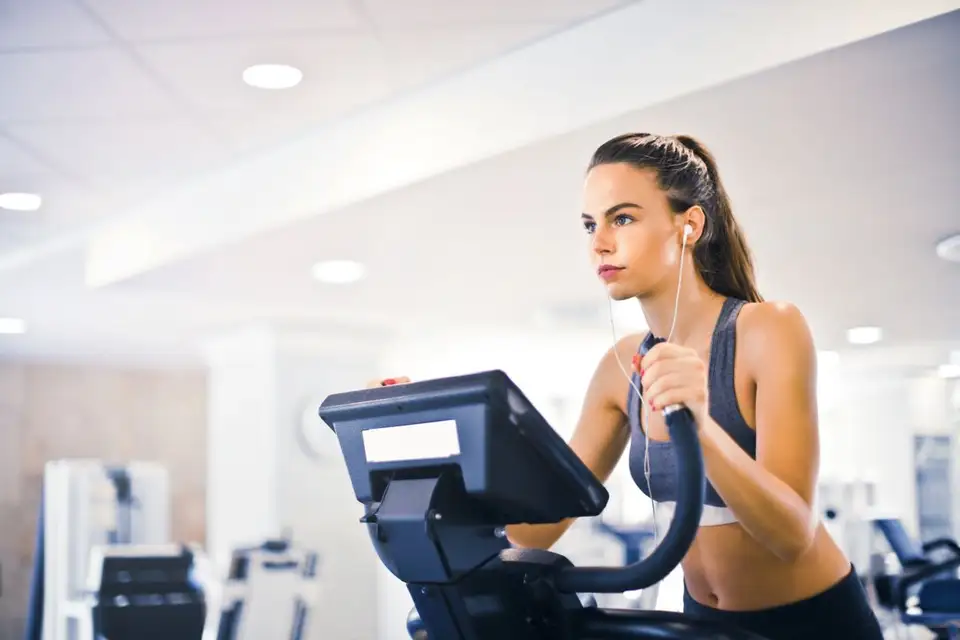
Cardiovascular programming Structured Zone 2 work, intervals, or sport-specific conditioning. Trainers program cardio based on heart rate data or RPE rather than leaving it to arbitrary treadmill time.
Personal Training vs. Self-Directed Gym Training
| Factor | Personal Training | Self-Directed |
|---|---|---|
| Program quality | Periodized, individualized | Depends on your knowledge |
| Injury prevention | High (real-time correction) | Variable |
| Progress speed | Faster (for most people) | Slower if program is random |
| Cost | Higher | Lower |
| Flexibility | Limited by trainer schedule | Full |
| Accountability | Built-in | Requires self-discipline |
| Learning curve | Lower | Higher |
Self-directed training works well for people with 3+ years of consistent experience who understand periodization and can objectively assess their own movement. For everyone else, especially people returning after a break or starting from zero, personal training compresses the learning curve significantly.
How to Get the Most Value From Personal Training Sessions
Paying for sessions is not enough on its own. The clients who see the fastest results do specific things outside the gym.
- Track nutrition — Trainers cannot override a calorie surplus or deficit. A rough food log shared weekly gives the trainer data to work with.
- Prioritize sleep — Below 6 hours per night measurably impairs recovery and blunts muscle protein synthesis. This affects whether your program actually works.
- Show up to all scheduled sessions — Missing one session per month over six months means losing roughly 6–8% of total training volume. That compounds.
- Complete assigned homework — Many trainers prescribe mobility work, accessory movements, or cardio between sessions. These are part of the program, not optional additions.
- Communicate plateaus and pain — Discomfort you don't report leads to programs that don't adjust. Trainers cannot read signs you don't give them.
Fitness Equipment Used in Personal Training Sessions
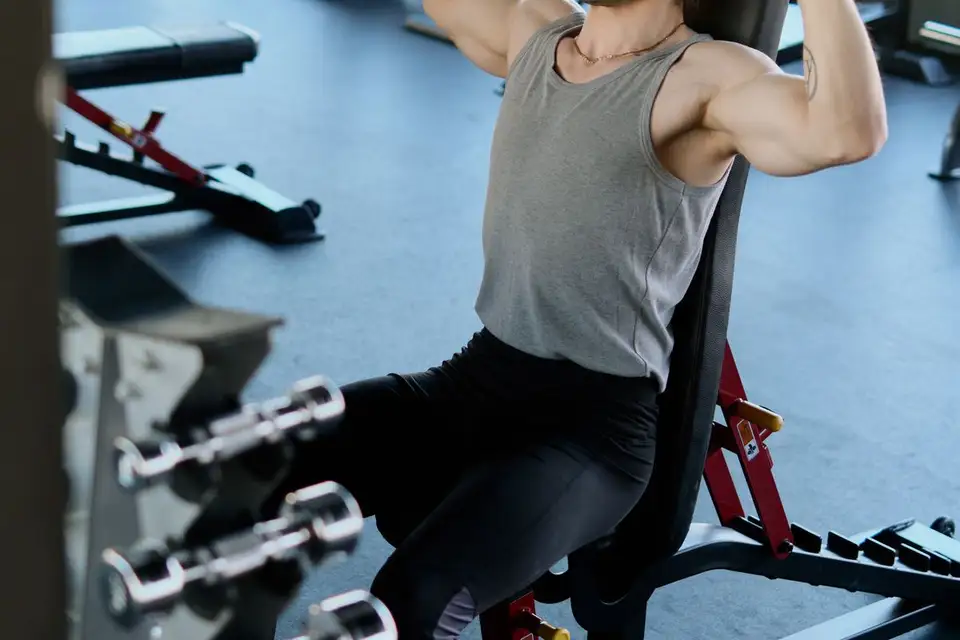
Personal trainers work with a wide range of equipment depending on gym availability and training phase. Common tools include:
- Barbells and plates — Foundational for progressive overload in strength phases
- Dumbbells — Versatile; used for unilateral work, accessory movements, and conditioning
- Cable machines — Allow constant tension through full range of motion; widely used for isolation and functional movements
- Resistance bands — Common in warm-ups, corrective work, and rehab-adjacent programming
- Kettlebells — Used for ballistic movements (swings, cleans) and conditioning circuits
- TRX / suspension trainers — Body-weight based; useful for core stability and functional strength
- Cardio equipment (rowers, assault bikes, ski ergs) — Often used in HIIT finishers or aerobic capacity blocks
Trainers working in well-equipped commercial gyms typically have access to all of the above. Boutique studios often specialize in one or two modalities.