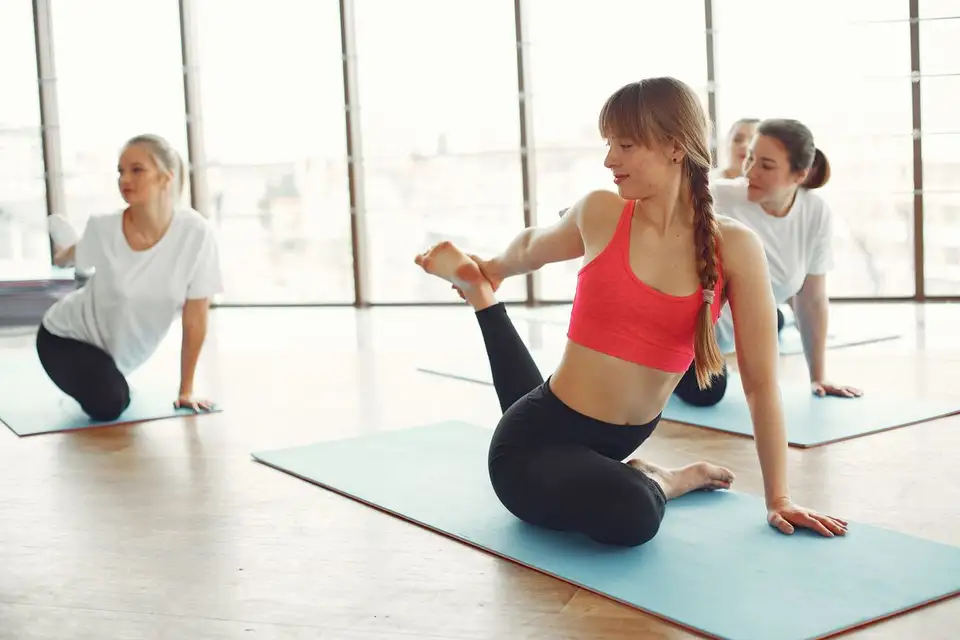
You do not need a gym membership to get stronger, leaner, or more conditioned. Home workouts, when structured correctly, produce measurable results — and in 2026, the tools, knowledge, and programming available to train at home are better than ever. The key is replacing randomness with a repeatable system.
Why Home Training Fails — and How to Fix It
Most people who quit home workouts do so because they never had a plan. They cycle through random YouTube videos, skip warm-ups, and have no progression model. Without progressive overload — gradually increasing volume, intensity, or load — your body has no reason to adapt.
Common failure points:
- No weekly structure
- Skipping compound movements in favor of isolated exercises
- Treating every session like a full-body HIIT class
- No tracking of reps, sets, or difficulty
Fix these four things, and home training becomes as effective as most commercial gym programs.
What Equipment You Actually Need
You do not need a full rack or a cable machine. Most effective home setups cost between $150 and $400 total and cover 80% of what a gym provides.
| Equipment | Cost (approx.) | What It Unlocks |
|---|---|---|
| Resistance bands (set) | $25–$45 | Pulls, rows, lateral work, mobility |
| Adjustable dumbbells (up to 50 lb) | $180–$300 | Pressing, curls, lunges, RDLs |
| Pull-up bar (door frame) | $30–$50 | Horizontal pulling, core, scapular health |
| Gymnastics rings | $35–$60 | Push-up variations, rows, dips |
| Yoga mat | $20–$40 | Floor work, stretching, core circuits |
If budget is tight, start with resistance bands and a pull-up bar. That combination allows upper-body pulling (one of the biggest gaps in bodyweight-only training), pressing, hinging, and mobility work.
The Core Principles of an Effective Home Workout Program
Before picking exercises, understand the framework every solid program uses.
1. Movement patterns over muscles
Train movements, not muscles in isolation. The seven foundational patterns:
- Push (horizontal: push-up; vertical: overhead press)
- Pull (horizontal: band row; vertical: pull-up)
- Hinge (Romanian deadlift, good morning)
- Squat (goblet squat, split squat)
- Carry (farmer carry, suitcase carry)
- Core anti-rotation (Pallof press, dead bug)
- Locomotion (walking lunges, lateral shuffles)
2. Progressive overload without added weight
When you cannot add plates, progress in other ways:
- Increase reps within a set range (e.g., 8 to 12)
- Slow the eccentric (4-second lower vs. 1-second)
- Reduce rest periods from 90 seconds to 60 seconds
- Advance to a harder variation (push-up → archer push-up → one-arm negative)
3. Training frequency
For most adults with general fitness goals, 3 to 4 sessions per week is optimal. 5 or 6 days works only when intensity is varied intentionally — hard, moderate, light. Doing high-intensity work every day leads to plateaus and overuse injury.
4-Week Home Workout Plan (Beginner to Intermediate)
This plan requires dumbbells or resistance bands and a pull-up bar. Rest 60–90 seconds between sets.
Week 1–2 (Foundation)
Day A — Push + Core
| Exercise | Sets | Reps |
|---|---|---|
| Push-up (controlled) | 3 | 8–12 |
| Dumbbell overhead press | 3 | 10 |
| Tricep dip (chair) | 3 | 10 |
| Dead bug | 3 | 8 per side |
| Plank hold | 3 | 30 sec |
Day B — Pull + Hinge
| Exercise | Sets | Reps |
|---|---|---|
| Banded row or dumbbell row | 3 | 10–12 |
| Pull-up or band pull-apart | 3 | 6–10 |
| Romanian deadlift (dumbbells) | 3 | 10 |
| Good morning (bodyweight) | 3 | 12 |
| Birddog | 3 | 8 per side |
Day C — Lower Body + Cardio
| Exercise | Sets | Reps |
|---|---|---|
| Goblet squat | 3 | 12 |
| Reverse lunge | 3 | 10 per leg |
| Glute bridge | 3 | 15 |
| Step-up (sturdy chair) | 3 | 10 per leg |
| Jump rope or high knees | 3 | 30 sec |
Week 3–4 (Progression)
Increase reps by 2 per set or slow the eccentric to 3 seconds. Add one harder variation per session — for example, push-up with a pause at the bottom, or single-leg Romanian deadlift.
HIIT at Home: Effective Protocols Without Equipment
High-intensity interval training at home works best when you choose the protocol based on your current fitness level, not just what looks intense online.
| HIIT Protocol | Work : Rest | Duration | Best For |
|---|---|---|---|
| Tabata | 20 sec : 10 sec | 4 min per round | Metabolic conditioning |
| 30/30 intervals | 30 sec : 30 sec | 15–20 min | Fat loss, beginners |
| EMOM (every minute on the minute) | Variable | 20–30 min | Strength-endurance |
| Circuit (5–7 exercises) | 40 sec : 20 sec | 25 min | Full-body conditioning |
A realistic HIIT session for someone at an intermediate level:
- Burpee: 30 seconds
- Jump squat: 30 seconds
- Mountain climber: 30 seconds
- Push-up: 30 seconds
- Rest: 90 seconds
- Repeat 4–5 rounds
Do not run HIIT more than 3 times per week. It generates a significant stress response. Two sessions per week alongside 2 strength sessions is a more sustainable combination.
Cardio Options That Work Inside Your Home
Running is not the only cardio option, and for many people it is not even the best one. Here are alternatives that work in a small space:
- Jump rope: 10 minutes of moderate-paced jumping equals roughly 1 mile of running in caloric burn. A basic speed rope costs under $15.
- Stair climbing: If you have a staircase, a 15-minute stair protocol (walking up and down with a weighted backpack) is a serious conditioning tool.
- Shadow boxing: 3 x 3-minute rounds with 1-minute rest raises heart rate to 75–85% of maximum for most people.
- Dance cardio or rhythm workouts: Effective for adherence, especially for people who dislike traditional cardio formats.
- Rower or stationary bike: If you have the space and budget, a foldable rower ($300–$500) or a compact spin bike covers cardio comprehensively.
Yoga and Mobility: The Part Most People Skip
Strength and cardio without mobility work creates a body that moves poorly and gets injured easily. Two mobility sessions per week — 20 to 30 minutes each — is enough to maintain joint health and recovery.
Focus areas by common weakness:
| Area | Common Issue | Key Mobility Drills |
|---|---|---|
| Hip flexors | Tight from sitting | 90/90 stretch, couch stretch |
| Thoracic spine | Rounding from desk work | Thread-the-needle, foam roll extension |
| Hamstrings | Limits hinge mechanics | PNF stretch, lying hamstring stretch |
| Ankle dorsiflexion | Limits squat depth | Wall ankle stretch, calf foam roll |
| Shoulders | Impingement risk | Band dislocates, doorframe pec stretch |
If you can add a 20-minute yoga session twice per week, it covers most of the above. Sun salutation sequences are particularly effective as active warm-ups before strength training.
Tracking Progress at Home
Without gym machines that track load automatically, you need a simple system. A notes app or paper log works fine.
Track per session:
- Exercise name
- Sets completed
- Reps completed
- RPE (rate of perceived exertion, scale 1–10)
- Any notes (felt easy, shoulder tight, etc.)
Review every two weeks. If a movement has been at the same reps and RPE for more than two consecutive weeks, it is time to progress: add reps, slow the tempo, or move to a harder variation.
Nutrition Basics That Anchor Home Workout Results
Training results do not come from exercise alone. For someone doing 3–4 home sessions per week with general body composition goals, these numbers are a useful starting point:
| Goal | Protein Target | Calorie Approach |
|---|---|---|
| Fat loss | 0.8–1.0g per lb of bodyweight | 300–500 kcal deficit |
| Muscle building | 0.8–1.0g per lb of bodyweight | 200–300 kcal surplus |
| Maintenance | 0.7–0.9g per lb of bodyweight | Eat to appetite with tracking |
Timing matters less than total daily intake. Getting enough protein spread across 3–4 meals is more important than pre/post-workout windows for most non-competitive athletes.