Flexibility training is one of the most skipped components of fitness, yet it directly affects how well you perform every other workout. Tight hips limit your squat depth. Limited shoulder mobility reduces your bench press range. Poor thoracic mobility creates back pain during deadlifts. This guide covers what flexibility training actually involves, how to structure it, and what mistakes to avoid.
What Flexibility Training Actually Is
Flexibility training refers to deliberate practice designed to increase the range of motion (ROM) at one or more joints. It includes static stretching, dynamic stretching, PNF techniques, and mobility work. These are not the same thing, and using the wrong method at the wrong time can reduce performance or increase injury risk.
| Method | Best Timing | Duration per stretch | Primary Effect |
|---|---|---|---|
| Static stretching | Post-workout, rest days | 30–60 seconds | Increases muscle length over time |
| Dynamic stretching | Pre-workout warm-up | 10–15 reps per movement | Activates range + raises tissue temp |
| PNF (contract-relax) | Post-workout or dedicated sessions | 6-second contract + 30-second stretch | Fastest short-term ROM gains |
| Foam rolling / SMR | Pre or post-workout | 30–90 seconds per area | Reduces tissue stiffness, improves blood flow |
Research from the Journal of Strength and Conditioning Research shows that static stretching held for 60 seconds or longer before strength training reduces force output by up to 8%. That is why placement matters as much as the stretching itself.
The Difference Between Flexibility and Mobility
These terms get used interchangeably, but they measure different things.
- Flexibility: passive range of motion, how far a muscle can lengthen when an external force is applied
- Mobility: active range of motion, how far you can move a joint under your own muscular control
A person can be flexible but lack mobility. An example: you can pull your leg into a high hamstring stretch with your hands, but cannot lift it that high on its own. For functional fitness, mobility matters more. Flexibility is the prerequisite.
How Long It Takes to See Results
Improvements in flexibility follow a predictable timeline when training is consistent:
- 2 weeks: Neurological adaptation, the nervous system becomes less resistant to the stretch
- 4–6 weeks: Noticeable change in resting muscle length
- 3–6 months: Structural changes in connective tissue and fascia
- 6–12 months: Lasting gains that carry over into performance
One study tracking 8 weeks of daily hamstring stretching found a 26% improvement in sit-and-reach distance with just 30 minutes of stretching per week. Frequency matters more than session duration.
Flexibility Training by Body Region
Hips and Hip Flexors
The hip flexors are chronically shortened in people who sit for 8+ hours a day. This affects posture, squat mechanics, and lower back health.
Effective exercises:
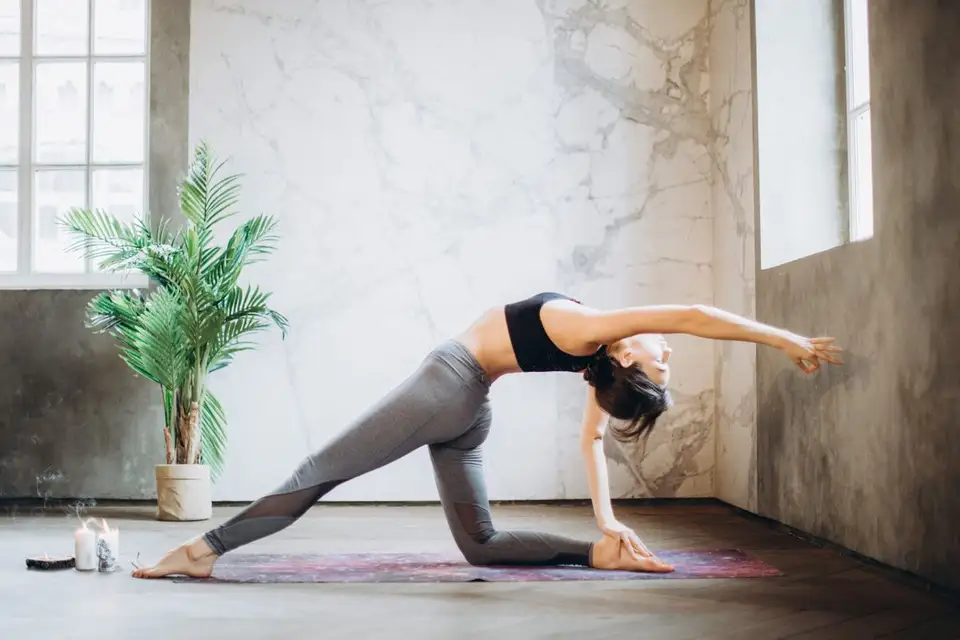
- 90/90 hip stretch (3 x 60 seconds per side)
- Couch stretch for rectus femoris (2 x 60 seconds per side)
- Deep squat hold with controlled breathing (2 x 90 seconds)
- Hip CARs (controlled articular rotations), 5 slow circles each direction
Thoracic Spine
Limited thoracic rotation shows up in nearly every overhead movement and many rotational sports.
Effective exercises:
- Thread-the-needle rotation (10 reps per side)
- Foam roller thoracic extension over 3 different vertebral levels
- Open book stretch (10 reps per side with 3-second pause)
Hamstrings
The most commonly trained flexibility area, but also the most commonly trained incorrectly.
- Do not bounce in a forward fold
- Progress from a bent-knee RDL hold to a straight-leg variation over weeks
- Supine hamstring stretch with a strap outperforms standing toe touches for isolated lengthening
Shoulders and Chest
Rounded shoulders reduce overhead pressing mechanics and create impingement risk.
Effective exercises:
- Sleeper stretch (2 x 60 seconds per side)
- Doorway chest stretch at three angles: arms low, parallel, high (30 seconds each)
- Wall angels with lumbar support to reinforce positioning
How to Structure a Flexibility Routine
Option 1: Integrated Into Existing Workouts
This approach works for people who will not dedicate separate sessions to flexibility.
- Pre-workout: 5–8 minutes of dynamic work targeting the day's primary joints
- Post-workout: 8–10 minutes of static and PNF work for muscles trained that day
Sample post-leg-day sequence (10 minutes):
- Standing quad stretch – 45 seconds per side
- Supine hamstring stretch with strap – 60 seconds per side
- 90/90 hip stretch – 60 seconds per side
- Deep squat hold – 90 seconds
- Couch stretch – 60 seconds per side
Option 2: Dedicated Flexibility Sessions
Best for people with significant restrictions or those training for activities like martial arts, gymnastics, or dance.
Recommended frequency: 3–4 sessions per week, 20–40 minutes each.
A 30-minute dedicated session structure:
| Phase | Duration | Content |
|---|---|---|
| Warm-up | 5 min | Light cardio or joint circles |
| Target area 1 | 8 min | Static + PNF for primary restriction |
| Target area 2 | 8 min | Static + PNF for secondary restriction |
| Full-body flow | 5 min | Dynamic yoga-style movement |
| Cooldown | 4 min | Diaphragmatic breathing in a passive stretch |
Option 3: Morning Mobility Practice
A 10–15 minute morning routine done consistently outperforms longer sessions done rarely. If mornings are the only reliable time available, this approach works.
Core movements for a morning routine:
- World's greatest stretch: 5 reps per side
- Cat-cow: 10 reps
- Hip circle: 10 each direction
- Child's pose with lateral reach: 45 seconds per side
- Standing thoracic rotation: 10 reps per side
Common Mistakes That Slow Progress
Stretching cold tissue. A 5-minute walk or cycling warm-up increases tissue temperature and makes stretching both safer and more effective.
Inconsistency. Stretching twice a week and expecting the same results as daily practice. Flexibility responds to frequency. Three times per week produces results. Seven times per week produces faster results.
Ignoring breathing. Exhaling slowly during the deepest part of a stretch activates the parasympathetic nervous system and directly reduces muscle guarding. Most people hold their breath.
Only stretching the muscles that feel tight. The tight muscle is often not the cause. A tight hamstring can result from weak glutes failing to stabilize the pelvis. Assess the whole chain.
Progressing too fast. Pain during a stretch is a signal, not a challenge. A 4–5 out of 10 sensation of tension is productive. Anything above 6 is counterproductive.
Flexibility Training for Specific Fitness Goals
For Strength Training
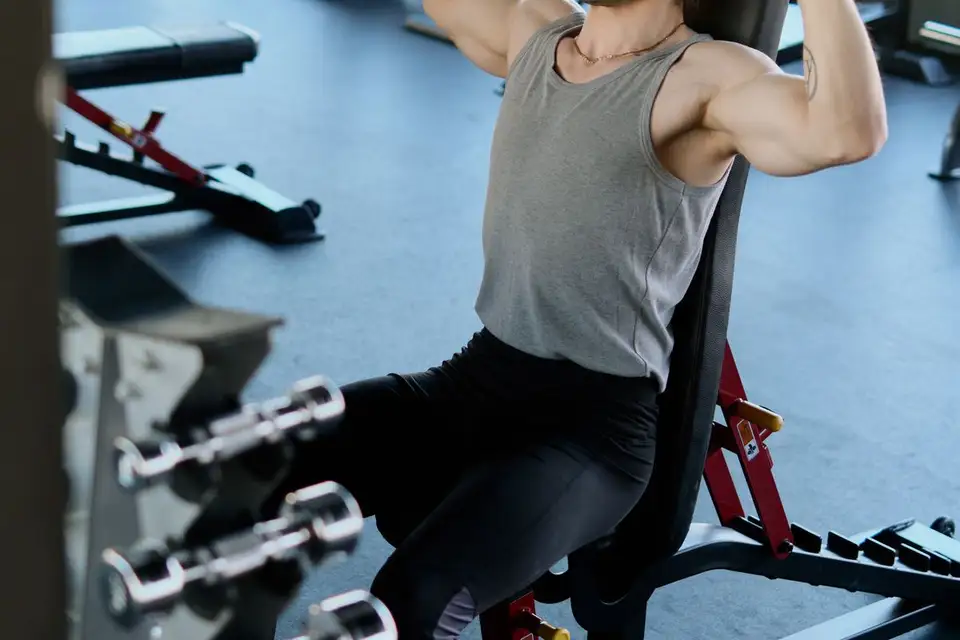
Focus: hip flexors, thoracic spine, lats, wrist extensors. A stiff lat limits how far overhead you can press without compensating through lumbar extension. Lat stretching with a dowel or doorframe takes under 3 minutes and changes pressing mechanics immediately.
For HIIT and Cardio
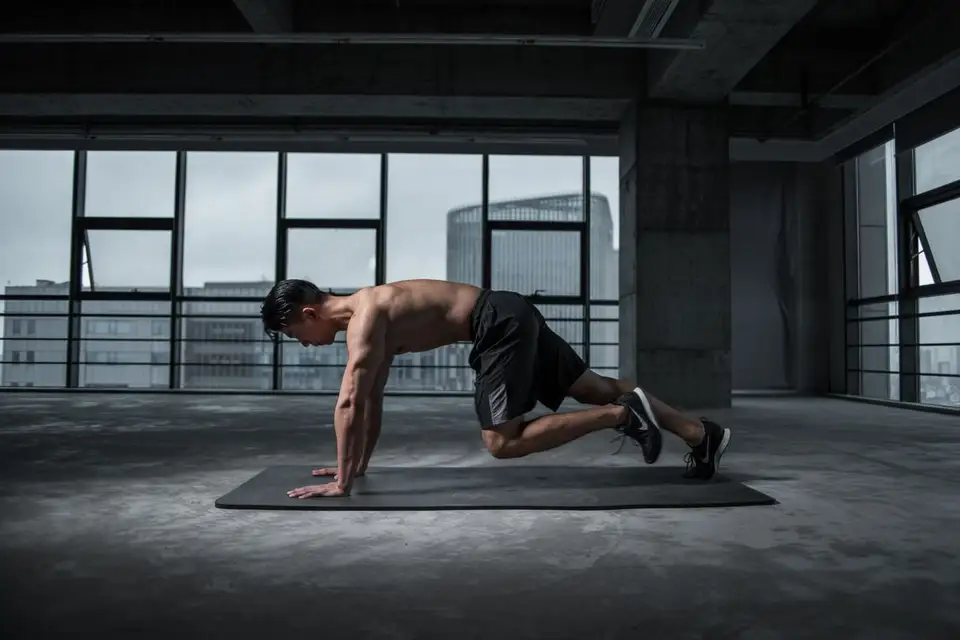
Focus: hip flexors, calves, IT band, anterior shoulder. HIIT places high-velocity demands on joints. Post-session static work for hip flexors and calves reduces next-day soreness and maintains stride length over time.
For Yoga Practitioners
If you already attend yoga classes, supplemental flexibility work should target areas yoga does not address heavily, specifically hip external rotation, thoracic rotation, and wrist extension.
For Sedentary Lifestyles and Desk Work
The priority areas are:
- Hip flexors (shortened from sitting)
- Thoracic spine (compressed from rounding forward)
- Cervical flexors (head-forward posture from screens)
- Chest and anterior deltoid (internally rotated shoulders)
Even 10 minutes of deliberate work targeting these four areas, three times per week, produces measurable postural changes within 6 weeks.
Tracking Progress
Measurement prevents wasted effort and keeps motivation grounded in reality.
Simple self-assessment metrics:
- Sit-and-reach test: Measure monthly in centimeters
- Deep squat hold: Time how long you can hold the bottom position with heels flat
- Shoulder flexion: Stand against a wall, raise arms overhead without the lower back lifting. Note the angle.
- Hip flexor test (Thomas test): Lie on the edge of a surface, pull one knee to chest. If the other leg lifts off the surface, hip flexors are shortened.
Photograph static positions monthly. Visual comparison over 3–6 months reveals progress that daily observation misses.